Resolving Aboveground Woody Biomass and Ecosystem Dynamics with NISAR and Ecological Scaling Theory
Role: Principal Investigator
Co-Investigators: Chi Chen and Efthymios Nikolopoulos
Introduction
Forests store vast amounts of carbon, but uncertainty remains in how their structure responds to water availability, warming and rising atmospheric carbon dioxide. This project will develop a theory-guided geospatial AI framework connecting NISAR radar observations with the ecological processes that shape forest structure and aboveground woody biomass.
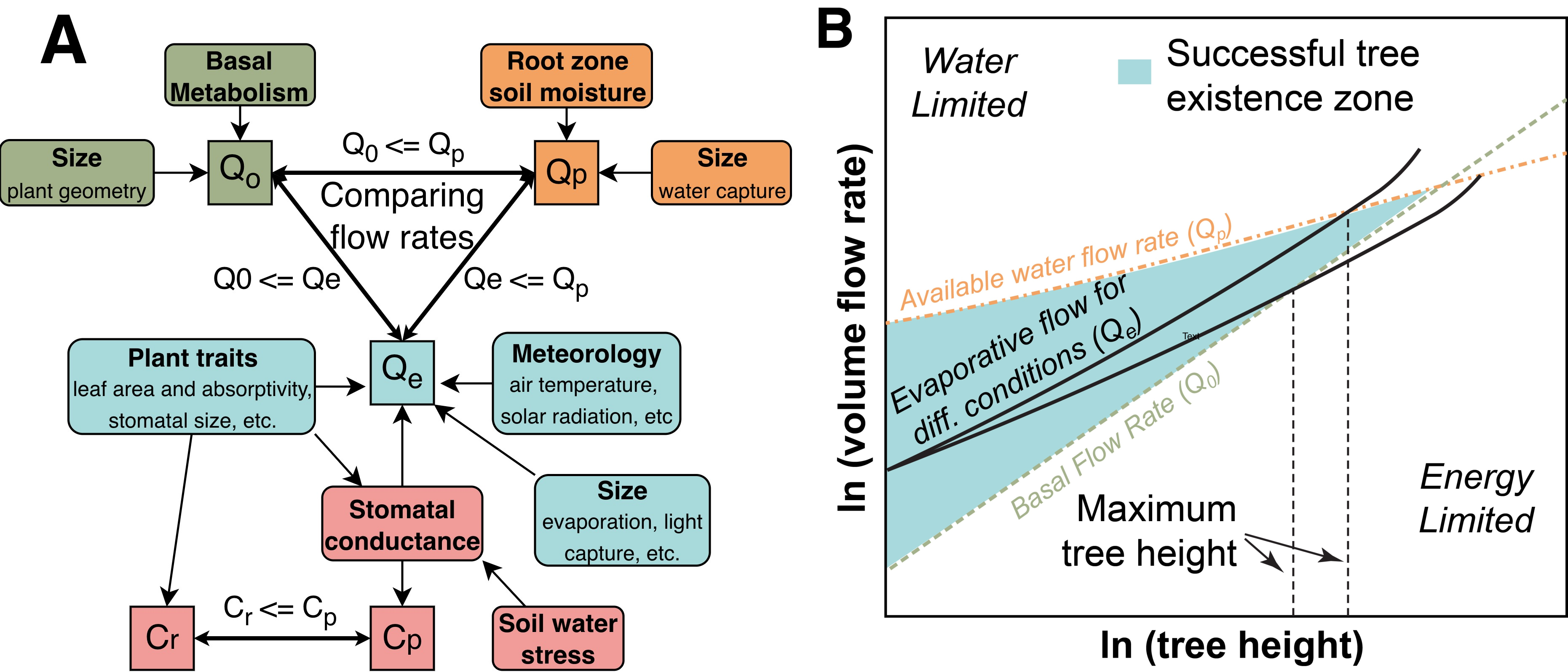
We will extend the Allometric Scaling and Resource Limitations (ASRL) model to represent coupled water, energy and carbon constraints, and integrate it with deep learning, NISAR L-band observations, S-band data where available, GEDI canopy-height measurements and environmental information. These ecological constraints will help guide estimates in high-biomass forests, where radar sensitivity to canopy height weakens.
The project aims to produce open-access maps of canopy height, biomass, plant traits and ecosystem conditions. These products will support assessments of environmental stress and investigations of how forest structure and carbon storage may change under future climate.